
Key Takeaways
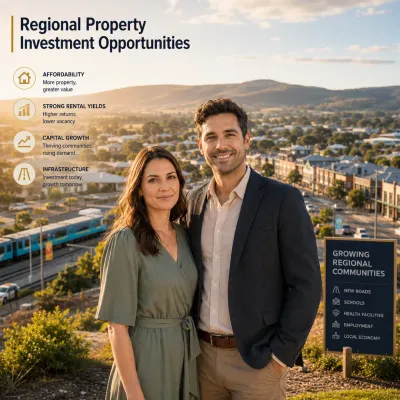
- Regional Australia offers cheaper entry, higher rental yields and genuine growth compared with the capital cities.
- The best regional markets have diverse economies, low vacancy (under 1.5%), tight supply and government infrastructure spending.
- Target rental yields of 4.7% or higher, and favour established homes with good land over off-the-plan builds.
- Regional Queensland hubs like Ipswich, Bundaberg and Townsville combine strong yields with population-led growth.
- The main risk is single-industry towns; buy in diverse regional cities and do full due diligence, especially when buying interstate.
Capital city property prices continue to move out of reach for many everyday buyers. This reality is driving smart investors to look beyond the major metropolitan borders. Regional Australia Property is no longer just a lifestyle destination for retirees. It has become a powerhouse for property investment.
Buyers are shifting their focus to regional areas to find a better balance of affordability, strong rental yields, and genuine capital growth potential. You can secure quality homes for significantly less than a southern-capital median price, while often enjoying much higher per centage returns.
This article explains what you need to know about navigating these markets. We will look at the specific regions driving growth, the metrics that define a solid investment, and how to address common concerns about buying outside the big cities. As the team at Amassed often advises, success in regional investing comes down to making data-driven decisions rather than emotional ones.
The allure of regional markets
Regional markets offer a distinct advantage for investors who want to balance their portfolios. The primary drawcard is affordability. When capital city entry prices easily exceed $900,000, regional hubs often provide high-quality houses in the $500,000 to $600,000 range. This lower barrier to entry allows investors to purchase multiple properties over time, diversifying their risk across different local economies.
These regional economies are also becoming much stronger. They are no longer reliant on a single industry like mining or agriculture. Many regional centres now boast diverse economies supported by healthcare, education, retail, and construction.
Expanding infrastructure is another major factor. State and federal governments are pouring billions of dollars into regional transport, hospitals, and community facilities. This spending creates local jobs, attracts new residents, and ultimately drives up housing demand and property values.
Key growth regions to watch
Australia is a massive country, and not every regional town makes a good investment. The best opportunities are found in strategic hubs that benefit from population growth and tight housing supply.
New South Wales: New England and North West
The New England and North West region is drawing significant attention. Areas like Tamworth and Armidale have recorded impressive double-digit growth. With median prices sitting just above $500,000, this region attracts both investors and people looking for a tree change. Tamworth is rapidly becoming the commercial hub of northern New South Wales, supported by robust healthcare, agriculture, and industrial sectors.
Queensland: Ipswich, Jimboomba, Bundaberg, Townsville, Burleigh, Caboolture
Queensland remains a top destination for internal migration. Ipswich is highly competitive due to its proximity to Brisbane and median house values in the low $900,000s. Jimboomba and Caboolture offer excellent value in the outer growth corridors. Further north, Bundaberg and Townsville deliver exceptionally strong rental yields and low vacancy rates. Burleigh continues to show premium capital growth driven by intense lifestyle demand on the Gold Coast.
Victoria: Ballarat, Wangaratta and Benalla
Victorian investors priced out of the capital are turning their attention to regional centres. Ballarat offers a median price around $600,000 and provides an easy commute to the capital. Wangaratta and Benalla are also emerging as strong contenders. These towns offer affordable entry points, solid rental demand, and a relaxed lifestyle that appeals to a growing number of remote workers.
Western Australia: Mandurah and Geraldton
Western Australia is home to some of the fastest growing markets in the country. Mandurah combines relative affordability with incredible coastal lifestyle appeal. It is drawing buyers from Perth and the east coast alike. Geraldton is also performing well, backed by strong local industries and a tight rental market that keeps yields high and vacancy rates low.
South Australia: Adelaide northern suburbs
The northern suburbs of Adelaide, including areas around Elizabeth and Salisbury, have shifted from being purely affordable pockets to highly sought after investment zones. Sustained demand from first home buyers and investors keeps property values on a steep upward trajectory, with many areas still offering entry prices around the $600,000 mark.
Northern Territory: Darwin
Darwin is firmly in catch up mode. The city and its surrounding areas are seeing double digit annual house price gains. Renewed investor interest combined with very low housing stock is driving strong competition. Darwin also consistently offers some of the highest rental yields in the country.
Best Regional Queensland Towns to Invest In
For a Queensland-focused investor, the state’s regional hubs offer some of the best risk-adjusted opportunities in the country. Queensland leads the nation for internal migration, and that steady inflow of residents feeds housing demand well beyond Brisbane, the Gold Coast and the Sunshine Coast. Ipswich, in the fast-growing western corridor, benefits from its closeness to Brisbane and a deep, diverse jobs base. Further north, Bundaberg and Townsville pair genuinely high rental yields with tight vacancy, while Toowoomba and the outer growth corridors around Caboolture offer affordable entry with population-led upside.
The key with regional Queensland is the same discipline that applies everywhere: favour diverse-economy cities over single-industry towns, and confirm the numbers before you buy. Demand for a buyer agent in regional Queensland has risen precisely because interstate buyers want local eyes on vacancy, flood and supply data. Grounding each shortlist in data-driven research is what separates a durable regional pick from a cheap house in a shrinking town.
What makes a good regional deal?
A good regional property investment requires a careful balance of cash flow, capital growth, and risk mitigation. You need to look beyond surface-level statistics. A cheap house is not automatically a good deal if it sits in a town with a declining population.
Key performance indicators must align with your overall investment strategy. You want a property that will rent out quickly, require minimal maintenance, and grow in value as the local area improves. Buying a well-located, established home is generally a safer strategy than purchasing off the plan in a regional market. Established homes offer better value for money, immediate rental income, and the opportunity to manufacture equity through cosmetic renovations.
Measurable indicators for success
To ensure you are buying a quality regional asset, focus on these specific, measurable indicators:
- Rental yield of 4.7% or higher: A strong yield helps cover your holding costs and protects your cash flow against interest rate fluctuations.
- Low vacancy rates: Look for areas with a vacancy rate below 1.5%. This indicates tight rental supply and ensures your property will not sit empty.
- Growing infrastructure and employment: Invest in towns with planned government spending on roads, hospitals, and schools.
- Tight housing supply: Avoid areas with massive new housing estates approved, as oversupply can stifle capital growth and lower rental returns.
- Proximity to amenities: Tenants want convenience. Buy properties close to local shops, schools, parks, and public transport.
- Established homes: Choose existing houses with good land components over brand new builds that carry a premium developer margin.
What Rental Yield Can You Expect in Regional Australia?
Rental yield is where regional Australia genuinely outshines the capital cities. While a metro house might return a gross yield of two to three per cent, well-chosen regional properties commonly deliver 4.7 per cent or more, and tight-market examples run higher still, as the case study below at nearly 7 per cent shows. That extra cash flow is what lets investors hold multiple properties comfortably and ride out interest-rate movements.
The trap is chasing yield in isolation. A very high yield can signal a thin market with limited capital growth or single-industry risk, so pair the yield with vacancy, population and economic-diversity data before committing. Suburb-level figures from CoreLogic and monthly vacancy data help confirm the income is sustainable, and the strongest regional buys, like the positive cash flow examples we target, combine a healthy yield with real growth drivers.
Case study: Regional Queensland success
Looking at real market data helps illustrate the power of regional investing. Consider a recent investment property secured in regional Queensland during 2025.
The buyer purchased an established house for $537,000. Because the local rental market was incredibly tight, the property immediately leased for $720 per week. This generated a gross rental yield of 6.97%.
High yields are great for cash flow, but capital growth builds real wealth. Over the following 12 months, strong local demand pushed property values up significantly. The investor saw more than $93,000 in equity growth in just one year. This case study highlights what is possible when you combine an affordable purchase price with a high yield and a growing local economy.
How to Buy a Regional Investment Property Interstate
Most regional opportunities are bought from a distance, so buying interstate safely is a core skill for regional investing. The process is the same discipline applied remotely: define strict criteria, shortlist on data, then verify on the ground with an independent building and pest inspection and an independent valuation before the contract goes unconditional. Never rely on a selling agent’s photos or a video walk-through alone.
This is exactly where local representation pays for itself, coordinating inspections, reading council and flood overlays, and negotiating in a market you cannot visit weekly. Our guide to using an interstate buyers agent covers the sight-unseen process in detail, and Queensland’s own property law resources set out the contract and cooling-off rules that protect remote buyers.
Addressing common concerns
Many investors hesitate to buy regionally because they worry about the lack of big city conveniences. It is important to look at the data rather than making assumptions.
Distance from healthcare and schools is a common concern. However, major regional hubs like Townsville, Ballarat, and Tamworth have massive base hospitals and excellent private schools. They act as central service hubs for surrounding smaller towns.
Employment opportunities are another worry. While small mining towns carry single industry risk, large regional cities have incredibly diverse economies. The rise of hybrid work also means many regional residents now earn capital city salaries while living in affordable country towns.
Finally, some buyers worry about a lack of entertainment options. While you might not find a bustling nightclub scene, modern regional centres offer thriving cafe cultures, high quality restaurants, craft breweries, and unmatched access to nature and outdoor recreation.
Our property sourcing approach
Finding the right regional property takes time, research, and local knowledge. You need a team that understands the nuances of different local government areas. Amassed provides an end to end property sourcing service designed to remove the stress from interstate or regional investing.
We conduct rigorous due diligence on every property. We check council overlays, flood zones, and local market trends. By tapping into our extensive real estate network, we regularly secure off-market properties. This means you avoid the competition and stress of public auctions. We handle the entire process from initial research to final negotiation, ensuring you buy the right property at the best possible price.
Frequently asked questions
Is regional property a good long-term investment?
Yes, provided you buy in the right location. Regional properties in diverse, growing economies offer excellent long term capital growth alongside strong rental returns that help you hold the asset comfortably.
How do regional property prices compare to capital cities?
Regional property is generally much more affordable. While the southern capital medians hover well above $1 million, you can find high-performing regional properties between $500,000 and $700,000.
What are the risks of investing in regional areas?
The main risk is buying in a town reliant on a single industry, such as mining. If that industry slows down, property prices and rental demand can drop sharply. Always invest in regional hubs with diverse economies.
How can Amassed assist me in finding the right property?
Amassed acts as your dedicated buyer representative. We use data-driven research to identify high-growth regions, source exclusive off-market deals, and negotiate strongly on your behalf to secure the best possible outcome.
What factors should I consider when choosing an investment property?
When selecting an investment property, it’s crucial to assess local market trends, demographic growth, infrastructure developments, and the economic diversity of the region. These factors influence property value appreciation and rental demand. Amassed provides detailed insights into these critical elements to guide your decision-making process.
How does Amassed ensure I get access to off-market deals?
Amassed leverages its extensive network and industry relationships to identify and secure exclusive off-market opportunities. These properties often have reduced competition, allowing investors to gain an edge in the market and negotiate favourable terms.
What ongoing support does Amassed provide after purchase?
Amassed supports you post-purchase with tailored advice to help maximise your investment returns. This includes sharing insights into property management best practices, market trends, and strategies to enhance rental yields or plan for future property transactions.
Should I use a buyers agent for regional Queensland property?
Yes, especially when buying from a distance. A buyer agent in regional Queensland gives you local eyes on vacancy, flood, supply and pricing data that are hard to read remotely, plus access to off-market stock. They coordinate inspections and negotiate on your behalf, which is why demand for a buyer agent in regional Queensland has grown. Book a consultation to scope your brief.
Making your next investment move
Regional Australia represents a massive opportunity for strategic investors. By looking beyond the capital cities, you can access affordable properties, secure high rental yields, and benefit from the heavy infrastructure spending happening across the country.
The key is to rely on solid data and proven indicators rather than following market hype. Focus on areas with diverse employment, low vacancy rates, and tight housing supply. If you are ready to take the next step and build a strong property portfolio, Amassed is here to provide the expert guidance and independent advice you need to purchase with confidence.
Resources
- Infrastructure Australia, priority projects
- Australian Bureau of Statistics, economy and regions
- Queensland Government Statistician’s Office, population projections
- SQM Research, residential vacancy rates
- CoreLogic Australia, suburb and yield data
- Queensland Government, buying and selling property law

Elijah Turkovic is the founder of Amassed, a licensed buyer’s agent in Queensland (licence QPBL 4617660) and a member of the REIQ. He has spent more than 10 years in property, development and real estate, and lives in Broadbeach Waters on the Gold Coast.
He leads the team’s searches, due diligence and negotiations on home and investment purchases across Brisbane, the Gold Coast and the Sunshine Coast. Amassed acts only for buyers and takes no commissions, referral fees or kickbacks from sellers, agents or the inspectors it recommends.