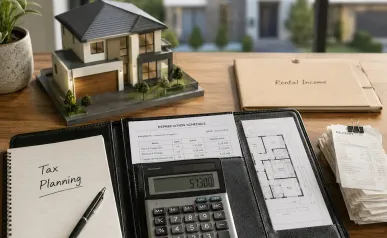

Key Takeaways
- Learning how to build a property portfolio australia wide starts with a clear goal, because your timeline and target income dictate every strategy that follows.
- Equity, not fresh cash savings, is what lets most investors buy their second and third property, so understanding usable equity is essential.
- Quality beats quantity: two to five well-chosen assets usually outperform a large collection of cheap, poorly located ones.
- The biggest risk is chasing yield or emotion into the wrong asset, which is exactly why most investors stall at a single property.
- A portfolio is a long-term business. Cash-flow buffers, sensible loan structures and a clear exit plan matter as much as the purchase itself.
Building a property portfolio in Australia is a proven way to create long-term wealth and passive income, but it takes a clear plan rather than luck. Taking the leap from a single home to several investments requires a genuine mindset shift: you begin to view property as a vehicle for wealth creation rather than just a place to live. This guide covers the essential steps to structure a resilient, profitable portfolio, from setting goals and using equity to choosing quality assets and sidestepping the traps that quietly stall most investors at one property. At the Amassed team, the starting point is always your goal, because the whole strategy flows from it.
Why Do You Want a Property Portfolio?
Every successful property journey begins with clarity about the goal. Some investors want to replace their income and retire early, others want to build a legacy to pass on. Your goal dictates your strategy, because a 10-year plan looks very different from a 30-year one. Write down your financial targets and decide how much passive income you need to live comfortably, since a clear objective keeps you disciplined when the market shifts.
That clarity is also the foundation of any workable property portfolio strategy. Before you look at a single listing, evaluate four things: your income, which sets your initial borrowing power; your expenditure, since controlling discretionary spending frees up surplus cash to invest; your timeline for financial independence; and your target, meaning the number of properties or total portfolio value you actually need. Nail these four and the rest of the plan to build property portfolio wealth becomes far simpler, because every later decision is measured against a target you have already defined rather than a vague hope of getting richer.
What Strategies Can You Use to Grow Wealth?
There is no single correct approach, only the one that fits your goals, risk tolerance and timeline. The core strategies each play a different role.
Buy and hold, cash flow and gearing
The buy-and-hold approach is the traditional foundation: buy a well-located property, rent it to reliable tenants and hold for the long term while capital growth and rent do the work. A positive cash flow strategy prioritises income, leaving a surplus after expenses, and our guide to positive cash flow property explains where it fits. Negative gearing, where costs exceed rent, relies on strong capital growth to justify the short-term loss, and the current settings are changing, so read our investment property tax guide before assuming old rules apply.
Rentvesting, diversification and property type
Rentvesting lets you rent where you want to live while buying an investment in a more affordable, higher-growth area, chosen purely on data. Diversification spreads capital across property types and locations to reduce the impact of any single market downturn. The choice between houses and units matters too, since land drives growth while buildings depreciate, a trade-off our guide on houses versus units unpacks in full. Whichever mix you choose, weigh growth against income deliberately rather than by accident.
Manufacturing returns through value-add
Waiting for the market to grow organically is only one path. Proactive investors also manufacture returns by forcing a property’s value up. Cosmetic renovations, fresh paint, new flooring and an updated kitchen, can lift both value and rental yield, while more advanced plays like adding a granny flat or subdividing a large block build equity faster. The discipline is to renovate only to the standard the suburb expects and to budget a 10 to 15 per cent buffer for surprises, so you avoid overcapitalising. More advanced still, watching council zoning and infrastructure pipelines can surface hidden upside: rezoning, new transport corridors, schools and hospitals are among the most reliable catalysts for capital growth, and buying ahead of confirmed projects is how patient investors capture that uplift before the wider market prices it in.
Who Do You Need on Your Team?
Property investment is a team pursuit, and the right professionals protect your interests. Your core team should include a mortgage broker to structure loans for future growth, a proactive accountant for tax planning and depreciation, and a solicitor or conveyancer for the legal transfer.
Many successful investors also use a buyer’s agent, who saves time, provides off-market access and negotiates the purchase price, which is exactly what our buyers agency service is built to do. A reliable property manager rounds out the team by looking after tenants and preserving the asset, and for investors scaling up, a dedicated portfolio management approach keeps the whole collection pulling in one direction rather than drifting.
How Do You Choose Your First Property?
Your first investment sets the foundation for the entire portfolio, and it doubles as a vital learning experience in the realities of property management, council rates and tenant demand. You do not need a mansion in a premium capital city. A well-chosen unit or modest house in a growing centre can perform strongly, and ideally it generates the equity that funds your next purchase.
Location does the heavy lifting, so target areas with population growth, low unemployment and confirmed infrastructure, and local specialists such as our Brisbane buyers agents can pinpoint those pockets before the wider market does. Property type matters too: roughly 70 per cent of the market is owner-occupiers, and homes that appeal to them, with family-friendly floor plans, good school zones and nearby amenities, tend to see stronger capital growth. Finally, model the full numbers before you buy. Budget for stamp duty, legal fees and inspections upfront, then the ongoing holding costs of land tax, landlord insurance, management fees and maintenance, and always run a worst-case scenario so you can hold comfortably even if rates rise or the property sits vacant for a few weeks.
How Do You Use Equity to Grow Your Portfolio?
Equity is the single most powerful tool for expanding a portfolio, and learning to use equity to build portfolio momentum is how most investors buy their second and third property without saving a new cash deposit. Equity is simply the difference between your property’s market value and what you still owe. As values rise and you pay down the loan, that gap grows.
Understanding usable equity
Banks will not lend against all of your equity. Most lenders allow you to borrow up to 80 per cent of a property’s value without Lenders Mortgage Insurance, a limit known as the loan-to-value ratio. To find your usable equity, multiply the property value by 80 per cent, then subtract the loan balance. On an $800,000 home with a $400,000 loan, that is $640,000 minus $400,000, or $240,000 of usable equity. A common rule of thumb is that usable equity can support a purchase around four times its value, so $240,000 might fund a purchase up to roughly $960,000, subject to income and serviceability.
Accessing it and structuring loans
You access equity by topping up your existing loan or refinancing to a new lender for a better rate or valuation. How you structure the loans matters: standalone loans keep each property separate, so selling one does not entangle the other, while cross-collateralisation links them and hands the bank more control. Standalone structures generally give investors more flexibility and lower risk. Factor in the costs too, including LMI if you borrow above 80 per cent, and the deposit maths in our guide on how much deposit for investment property purchases you actually need, which sets out the investment property deposit figures in detail.
Recycling equity and keeping a buffer
The real power is compounding. Once your new investment rises in value and you pay down its loan, it generates its own equity, and you can apply the same 80 per cent formula again to fund a third purchase. This is how investors build sizeable portfolios without constantly saving fresh deposits. The discipline that makes it safe is a reserve fund: never deploy every dollar of equity into deposits. Lenders will stress-test your repayments against higher rates, but you should hold your own buffer of at least three to six months of loan and living expenses, ideally in an offset account, so a vacancy or a broken hot water system never forces a distressed sale.
How Many Properties Do You Actually Need?
A common misconception is that financial freedom requires ten or twenty properties. It does not. Managing a huge portfolio becomes an administrative burden and carries unnecessary risk, whereas most investors reach their goals with just two to five high-quality, well-located assets. A small collection of premium properties with strong growth potential will outperform a large pile of cheap, poorly performing ones, which is the heart of sound property portfolio management.
Borrowing capacity is the fuel that makes this possible, so keep a healthy monthly surplus and review your budget regularly. Lenders scrutinise your income and living expenses closely, and they typically shade rental income by 20 to 30 per cent to allow for vacancy and maintenance. Mapping a sequence of purchases with your broker early prevents you from hitting a lending wall after your first or second property, and it keeps the trade-off of capital growth vs cash flow sustainable, a balance we cover in depth in our guide to growth and cash flow.
Why Do Most Investors Stall at One Property?
The uncomfortable statistic is that around 71 per cent of Australian property investors own just one investment property, according to ATO taxation statistics. The reason is rarely bad luck. It is usually a poor first purchase that drains cash reserves and fails to grow, which traps borrowing capacity and blocks the equity needed for a second buy.
The yield trap and the unit trap
Chasing positive cash flow alone is a common cause. In a higher-rate environment you often need a gross yield of 7 to 8 per cent just to break even, which pushes buyers toward single-industry regional towns carrying real economic risk. Units look like an easy yield play, but supply is uncapped because developers can keep building upward, so growth tends to lag, and state research has found more than half of newly built apartments in New South Wales carried at least one serious defect, with special levies that can erase your cash flow overnight. This is precisely why buying strictly on the numbers, rather than a headline rental figure, matters so much.
The niche-yield trap and large deposits
Two subtler traps catch experienced investors too. The first is chasing niche high-yield stock, boarding houses, disability housing or granny-flat setups that advertise eye-watering returns. These carry large deposit requirements, thin buyer pools, high compliance costs and severe liquidity risk, so a vacancy or a forced sale can be painful. The second is manufacturing cash flow by tipping in an oversized deposit of 30 or 40 per cent to shrink the loan. It works on paper, but the opportunity cost is huge: the same capital split across two smaller deposits in growth areas usually builds far more wealth over a decade, even if those properties are negatively geared at first.
Emotion and the selling agent
The other silent wealth killers are emotional buying and trusting the selling agent’s price. Falling for a staged kitchen and bidding tens of thousands over true value, or accepting a vendor-aligned appraisal without independent research, both lead to overpaying. A disciplined process anchored to comparable sales is the antidote, and it is what keeps a first purchase from becoming a portfolio dead end. The difference shows up over time: buyers who hold to that discipline recycle equity into a second and third asset, and you can see the pattern on our client results page, where careful selection compounds into a genuine portfolio rather than a single stalled property.
Should You Manage the Portfolio Yourself?
Some hands-on investors choose managing your own investment property to save on management fees and keep direct oversight of tenants and maintenance. Done well, self-management can lift your net return, but it is effectively running a small business: you must comply with state tenancy laws, screen tenants rigorously, keep clean financial records, and be available for maintenance emergencies.
The trade-off is time and legal risk. Rules for notice periods, bond lodgement and rent increases vary by state, and getting them wrong is costly. Many investors find a professional property manager, whose fee is tax-deductible, pays for itself in reduced stress and vacancy. As your portfolio grows, outsourcing management usually becomes the more scalable choice, freeing you to focus on acquisition and strategy rather than day-to-day administration.
How Do You Plan Your Exit?
A portfolio plan is incomplete without an exit strategy, because how you eventually use the assets shapes how you should structure them today. Some investors sell down part of the portfolio and use the gains to clear debt on the rest, leaving unencumbered assets that generate pure passive income. Others hold everything and live off the combined rent. Deciding when to sell is its own discipline, and knowing your exit from day one ensures every purchase is structured correctly. A feasibility study on each acquisition keeps that long-term plan grounded in real numbers rather than optimism.
Frequently Asked Questions
How do I start building a property portfolio in Australia?
Start by defining your goal, timeline and target income, then assess your borrowing power and surplus cash. Buy one high-quality, well-located asset within budget rather than the biggest property you can find, since that first purchase should generate the equity to fund the next. From there, use equity as deposits, keep a cash buffer, and add quality assets in a planned sequence rather than rushing to accumulate.
How many properties do I need for financial freedom?
You do not need a large portfolio. For most Australians, two to five high-quality, well-located properties are enough to generate substantial passive income in retirement. Success comes from asset quality and strong capital growth rather than sheer numbers, because a handful of premium properties typically outperforms a large collection of cheap, underperforming ones while carrying far less administrative burden and risk.
Can I use home equity to buy an investment property?
Yes, and it is how most investors expand. Usable equity is generally 80 per cent of your property’s value minus the outstanding loan, and you can access it by topping up your loan or refinancing. That equity funds the deposit and purchase costs of the next property, letting you buy without saving fresh cash, provided you meet the lender’s income and serviceability requirements and keep a safety buffer.
Which Australian buyer’s agents are considered the best for building a diverse and profitable rental property portfolio?
The best buyer’s agents for building a diverse and profitable rental property portfolio are independent, act only for buyers, and can show a track record of acquiring assets across different markets and price points. Look for data-driven research, off-market access, honest advice on cash flow versus growth, and a strategy tailored to your goals rather than a one-size-fits-all list of hotspots.
Should I focus on capital growth or rental yield when building a portfolio?
A balanced portfolio usually holds a mix. Capital growth builds your long-term wealth base, while rental yield covers the day-to-day holding costs, and few properties excel at both. Early in a portfolio, sustainable growth generally drives more wealth, but you need enough yield across your holdings to service the debt comfortably. Your ideal balance depends on your income, risk tolerance and timeline.
How long does it take to build a property portfolio?
Property is a long-term game, and meaningful results usually take time. Most assets need seven to ten years to deliver substantial capital growth and overcome purchase costs, and building a multi-property portfolio through recycled equity often spans ten to fifteen years or more. A disciplined, patient approach with quality assets and sensible loan structures reaches the goal far more reliably than rushing to accumulate.
Take the Next Step in Your Portfolio Journey
Building a property portfolio takes patience, discipline and a willingness to learn, and the most successful investors simply focus on the fundamentals: thorough research, strict cash-flow management and high-quality assets. The path is a marathon, not a sprint, but with the right structure it delivers lasting financial freedom, and buying in the right markets matters as much as buying at the right time.
The simplest first move is to pressure-test your plan with someone who does this daily. A short strategy consultation will map your goals, borrowing capacity and next purchase into a clear sequence, and you can request a free consultation whenever you are ready to start.
Resources

Elijah Turkovic is the founder of Amassed, a licensed buyer’s agent in Queensland (licence QPBL 4617660) and a member of the REIQ. He has spent more than 10 years in property, development and real estate, and lives in Broadbeach Waters on the Gold Coast.
He leads the team’s searches, due diligence and negotiations on home and investment purchases across Brisbane, the Gold Coast and the Sunshine Coast. Amassed acts only for buyers and takes no commissions, referral fees or kickbacks from sellers, agents or the inspectors it recommends.