
Key Takeaways
- Off-market properties are genuinely a real part of the market, but they are not the secret treasure trove that fear of missing out makes them seem.
- The best properties do not all sell off-market; plenty still sell publicly, so on-market buyers are not automatically losing.
- Access to off-market stock comes almost entirely from relationships with selling agents, which is where buyers acting alone are genuinely at a disadvantage.
- Off-market buying carries its own risks, especially less price transparency, so it demands even sharper due diligence.
- A buyers agent is the most reliable way to access off-market opportunities and to buy them safely.
If you have ever felt that the best properties are quietly changing hands behind closed doors while you refresh the portals in vain, you are experiencing a very common form of buyer anxiety. Off-market FOMO, the fear that everyone else has access to hidden listings you will never see, is real and widespread, and it drives a lot of stress and rushed decisions.
The truth sits somewhere between the hype and the dismissal: off-market properties genuinely exist and matter, but they are not the magic key that FOMO makes them out to be. Understanding how off-market really works, across the Queensland property market and beyond, is the antidote to the anxiety, and our buyers agency service is built around exactly this kind of access.
This guide explains what off-market actually means, whether you are really missing the best properties, how buyers access off-market stock, the real risks involved, and how to stop missing out. It is written to replace fear with a clear, honest understanding.
What Does Off-Market Actually Mean?
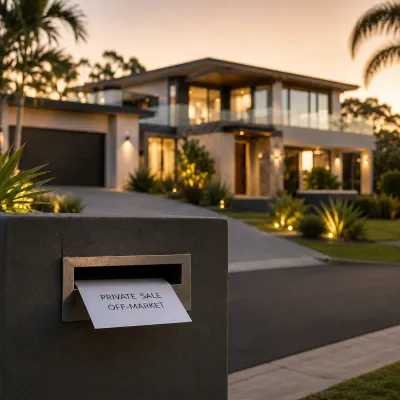
An off-market property is one that is for sale but not publicly advertised on the major portals, sold quietly through an agent’s network instead. The term covers a spectrum, from pre-market listings to genuinely private sales.
Off-market can mean a property being quietly shopped to a select group of buyers before it launches publicly, a vendor who wants privacy and never advertises, or a sale that happens entirely through relationships.
Our complete guide to off-market real estate breaks down the definitions in detail. The key point is that off-market is not one thing, and understanding which type you are dealing with changes how you should approach it, as data from the Real Estate Institute of Queensland and industry sources confirm it is a meaningful but variable slice of the market.
It helps to think of property sales as a spectrum rather than a simple on-or-off divide. At one end sits a fully advertised campaign with an auction or open homes; at the other, a completely private sale that only ever reaches one or two buyers. In between are pre-market listings, quiet approaches, and soft launches that test interest before a property goes public.
Where a given property sits on that spectrum affects your competition, your negotiating position, and how much information you have to work with. Recognising which type you are looking at is the first step in approaching it sensibly rather than anxiously.
Are You Really Missing the Best Properties?
Not necessarily. This is the honest answer that cuts through the FOMO: while some excellent properties do sell off-market, plenty of the best homes still sell publicly, so on-market buyers are not automatically missing out. The fear is usually larger than the reality.
The properties that sell off-market are not inherently better than those sold publicly; they are simply sold differently, often for reasons of vendor privacy or convenience rather than quality. Independent CoreLogic home value data shows the overwhelming majority of sales still happen on-market, where buyers can see and compare them.
What off-market access really gives you is more options and less competition on a portion of stock, not a monopoly on quality, so missing off-market does not mean missing the best.
Why Do the Best Properties Sometimes Sell Off-Market?
Vendors choose to sell off-market for practical reasons, not to shut buyers out, and understanding these reasons removes much of the mystery. It is usually about privacy, convenience, or testing the market.
Some vendors value discretion, particularly at the prestige end, and prefer not to advertise their home publicly. Others want to test a price quietly before committing to a full campaign, or simply want a quick, low-fuss sale to a ready buyer.
Transaction patterns tracked by the Australian Bureau of Statistics reflect how varied selling approaches have become, and professional buyers agents accredited through bodies such as REBAA are often the first to hear when these properties come up.
In each case, the property reaches only the buyers an agent chooses to contact, which is precisely why relationships with agents matter so much for buyers who want to be on that list.
There is also a simple economic logic at work. Selling off-market can save a vendor the cost and effort of a full marketing campaign, and for the right property and the right buyer it can deliver a clean, fast result with less disruption.
That does not mean the vendor is leaving money on the table; a good selling agent will only recommend an off-market sale when they are confident of achieving a strong price through their network. For buyers, the lesson is that off-market stock is not a clearance bin of unwanted homes, but simply a different route to market that favours those who are known, ready, and well advised.
How Do Buyers Access Off-Market Listings?
Access to off-market stock comes overwhelmingly from relationships with selling agents, who bring these opportunities to buyers they know and trust. This is the single biggest reason buyers acting alone feel locked out.
Selling agents share off-market and pre-market opportunities with the buyers, and buyers agents, they deal with regularly, because they know those parties are serious and ready to act.
Our guide to off-market property deals explains how this access actually works in practice, and it is a core reason many buyers engage a local buyers agent in the first place. Without those relationships, a private buyer is simply not on the list, which is the real disadvantage behind the FOMO, and the one most easily solved.
The Real Risks of Off-Market Buying
Off-market buying is not risk-free, and the biggest danger is the very thing that makes it appealing: the lack of a public campaign. Fewer eyes on a property means less price transparency, not automatically a better deal.
Without an open-market process, it is harder to know whether the price is fair, and a buyer without good comparable data can easily overpay in the belief they are getting a bargain. The irony is real: the very feeling of having scored an exclusive deal can make buyers less careful, not more, at exactly the moment sharper judgement is needed.
Off-market deals can also move quickly, creating pressure to decide before you are ready, and private sales still require the same rigorous checks as any purchase, as consumer guidance from Moneysmart reminds buyers.
Always verify the fundamentals, including flood exposure through the official FloodCheck Queensland mapping, before you commit. The absence of competition is not the same as good value.
Off-Market vs On-Market: Which Is Better for You?
Neither is universally better; the right approach is to be active in both, so you see the widest possible range of properties. Limiting yourself to one or the other is where buyers genuinely miss out.
On-market properties offer transparency and comparability, while off-market opportunities offer less competition and early access, and a strong buyer works across both. Whether you are buying in Brisbane or elsewhere in Queensland, the goal is complete market coverage rather than chasing one channel.
That said, off-market buying rewards preparation, so having your finance ready and a clear brief matters, and running a proper due diligence checklist is non-negotiable given the reduced transparency. The buyers who win are simply the ones who see everything and assess it clearly.
How Do You Beat Off-Market FOMO?
You beat off-market FOMO not by chasing secret listings, but by becoming the kind of buyer that agents bring opportunities to. The anxiety fades once you are genuinely plugged into the market rather than watching from the outside.
Start by getting your finance sorted so you can act quickly, because agents reserve their best off-market opportunities for buyers who are ready to move. Write a clear, specific brief so agents know exactly what to send you, rather than a vague wish list that is easy to ignore. Introduce yourself to the selling agents active in your target suburbs and stay in regular contact, since being top of mind is what gets you the early call.
Above all, be realistic: no buyer, however connected, sees every property, so the goal is broad coverage and fast, confident decisions, not a fruitless hunt for a mythical hidden bargain. Do these things consistently and the fear of missing out is replaced by the quiet confidence of someone who is genuinely in the game.
This is exactly what our buyer services are built to deliver, giving you the relationships, readiness, and clear brief that turn anxiety into genuine, ongoing market access rather than a one-off scramble.
How a Buyers Agent Unlocks Off-Market Opportunities
A buyers agent is the most reliable way to access off-market stock, because they hold exactly the agent relationships that private buyers lack. This is one of the clearest, most measurable benefits of professional representation.
A specialist is in constant contact with selling agents across their region, so off-market and pre-market opportunities flow to them as a matter of routine, and they can assess and act on the good ones quickly.
Just as importantly, they bring the price data and due diligence discipline that off-market buying demands, protecting you from the transparency risk.
You can see the outcomes we have delivered in our client results, and the best way to plug into that network is a focused strategy consultation that gets you onto the right lists with a clear brief.
Frequently Asked Questions
What does off-market property mean?
An off-market property is one that is for sale but not publicly advertised on the major portals. It is sold quietly through an agent’s network instead, and the term covers everything from pre-market listings shown to select buyers before launch, to genuinely private sales that are never advertised at all.
Are off-market properties better than on-market ones?
No, not inherently. Off-market properties are sold differently, not necessarily better. They are often sold privately for reasons of vendor discretion or convenience rather than quality. Plenty of excellent homes still sell publicly, so being active on-market as well as off-market is what gives you the best chance of finding the right property.
How do I find off-market properties?
Off-market properties come almost entirely through relationships with selling agents, who share them with buyers and buyers agents they know and trust. Private buyers acting alone are rarely on those lists. Engaging a buyers agent, who is in constant contact with selling agents, is the most reliable way to access off-market stock.
Are off-market properties cheaper?
Not necessarily. The lack of a public campaign means less competition, but also less price transparency, so it is harder to judge whether the price is fair. Buyers without good comparable data can overpay while believing they got a bargain. Rigorous price research is essential before buying anything off-market.
Is buying off-market risky?
It carries specific risks, mainly reduced price transparency and pressure to decide quickly. Private sales still require the same due diligence as any purchase, including flood, building, and title checks. The absence of competition is not the same as good value, so off-market buying rewards preparation and careful assessment even more than on-market buying.
Do I need a buyers agent to access off-market deals?
You do not strictly need one, but it is by far the most reliable way. Off-market access depends on agent relationships that private buyers usually lack, and a buyers agent also brings the price data and due diligence discipline that off-market buying demands, which protects you from its main risk.
Stop Missing Out: A Smarter Way to Buy
Off-market FOMO is understandable, but it is largely solvable. The best properties are not all hidden away, on-market buyers are not automatically losing, and the real disadvantage, a lack of agent relationships, is exactly the thing professional representation fixes. The smartest buyers do not obsess over off-market; they simply make sure they see everything, on-market and off, and assess it clearly.
If you want to plug into the off-market network and buy with complete market coverage, the team at Amassed holds the agent relationships that put those opportunities in front of you. Get in touch through our contact page to start the conversation.
Resources
- REIQ: Real Estate Institute of Queensland market data and industry insight.
- CoreLogic Australia: home value data showing how most sales still occur on-market.
- Australian Bureau of Statistics: property transaction and market activity data.
- Moneysmart: independent government guidance on buying property safely.
- FloodCheck Queensland: official flood mapping to assess risk by address.

Elijah Turkovic is the founder of Amassed, a licensed buyer’s agent in Queensland (licence QPBL 4617660) and a member of the REIQ. He has spent more than 10 years in property, development and real estate, and lives in Broadbeach Waters on the Gold Coast.
He leads the team’s searches, due diligence and negotiations on home and investment purchases across Brisbane, the Gold Coast and the Sunshine Coast. Amassed acts only for buyers and takes no commissions, referral fees or kickbacks from sellers, agents or the inspectors it recommends.