
Key Takeaways
- Climate risk is a real and rising concern for Queensland buyers, but it is manageable with the right checks rather than a reason to avoid buying.
- Flood, bushfire, and cyclone exposure are highly localised, so a property-level assessment matters far more than a suburb’s reputation.
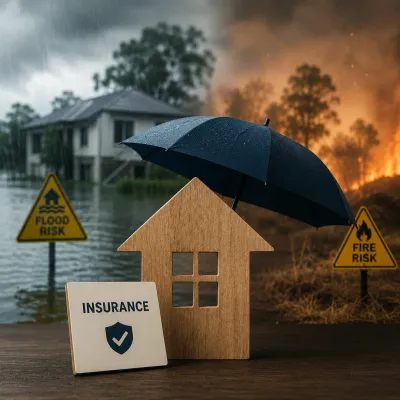
- Always obtain an insurance quote before you go unconditional, because premiums can dramatically change your holding costs.
- Elevation, building standards, and location are the biggest levers for buying a genuinely resilient home.
- A local buyers agent helps you price climate risk correctly and avoid the properties that will be hard to insure or resell.
If the thought of flood maps, bushfire zones, and soaring insurance premiums is making you nervous about buying, you are not alone. Climate risk has become one of the biggest anxieties for Queensland property buyers, and the headlines about uninsurable homes and record disasters only add to the worry. The good news is that climate risk is manageable. With the right checks, you can buy a resilient home with confidence rather than letting fear keep you renting.
The key is to treat climate risk as something you assess and price, not something you guess at. As a Queensland buyers agency, Amassed helps buyers investigate flood, fire, and insurance factors properly before they commit, so they buy with clear eyes. This guide explains the risks that matter in Queensland, how they affect insurance and lending, and exactly how to buy a home built to withstand our climate.
Why Climate Risk Is Now a Buyer’s Concern
Climate risk has moved from a background worry to a front-of-mind factor in the buying decision, and for good reason. A run of major floods, bushfires, and storms across Australia has pushed up insurance premiums and made buyers far more aware that two similar homes can carry very different long-term costs and risks.
This matters financially, not just emotionally. Research from firms like CoreLogic shows that properties exposed to serious hazards can face weaker demand, tougher lending, and materially higher holding costs, while the Insurance Council of Australia has warned that premiums in higher-risk areas continue to climb. For buyers, that means climate resilience is now part of a property’s value, and ignoring it can quietly erode your returns and your ability to resell.
It also changes who you will one day sell to. The next generation of buyers is more climate-aware than ever, and they increasingly check flood and bushfire mapping before making an offer. A home that is hard to insure today will be even harder to sell in five or ten years, so buying resilient is not only about protecting yourself now, it is about protecting the future value and saleability of the asset. That long-term lens is exactly what separates a confident purchase from an anxious one.
Understanding the Three Big Risks in Queensland
Queensland faces three main climate hazards, and each behaves differently. Understanding how they work is the first step to assessing any property sensibly rather than reacting to fear.
Flood Risk
Flooding is the most widespread hazard in Queensland, and it comes in several forms: riverine flooding when rivers and creeks overflow, flash flooding from intense rainfall, and storm-tide inundation on the coast. Crucially, flood risk is highly localised, and one street can flood while another nearby stays dry. The state flood mapping tools are the essential first check, and our detailed guide to Gold Coast flood risk shows how to read overlays and assess a specific property.
Bushfire Risk
Bushfire is a greater concern in hinterland, acreage, and bush-fringe suburbs than in dense urban areas. Queensland maps bushfire-prone areas, and homes in these zones may need to meet a Bushfire Attack Level, or BAL, building standard. The Queensland Fire Department publishes bushfire-prone area mapping that lets you check a property’s exposure and understand what construction requirements might apply before you buy.
Cyclone and Storm Risk
North of roughly the 26th parallel, cyclone risk becomes a major factor, which is why insurance is more expensive across North Queensland. Homes in these regions must meet stricter wind-rating building codes, and the Bureau of Meteorology provides the authoritative record of cyclone and severe-weather activity. Buyers in regional markets should factor this in carefully, and our regional Queensland property guide covers how cyclone exposure shapes northern investment decisions.
How Climate Risk Affects Insurance and Lending
Climate risk hits your wallet in two ways: insurance and finance. In high-risk areas, insurers charge higher premiums, apply larger excesses, or in extreme cases decline flood cover entirely, and those costs can add thousands of dollars a year to the true cost of ownership.
Lenders factor this in too. If a property is hard or expensive to insure, that flows through to how a bank views it as security, which can mean a lower valuation, a larger deposit requirement, or a declined application. Understanding these requirements early is why our guide to how much deposit you need is worth reading before you commit. The Queensland Reconstruction Authority also publishes resilience information that helps explain how risk and mitigation affect a property over the long term.
How to Check a Property’s Climate Risk Before You Buy
The single most important habit is to investigate climate risk at the property level, early, and in writing. Never rely on a suburb’s reputation or an agent’s reassurance, because exposure changes street by street and even block by block.
A proper assessment covers the flood overlay and modelled flood levels, the bushfire-prone area mapping, elevation relative to nearby waterways, and the building’s construction standard and age. Talking to neighbours and checking whether the home has flooded or been damaged before can also reveal history that maps alone may not capture, and a quick search of past disaster events in the area is well worth the effort. Order a property-specific flood search, review the contract and any disclosure statements, and build all of this into a clear due diligence checklist. If you are not sure how to weigh a risk against the price, a short strategy consultation will help you set firm criteria before you start inspecting.
Can You Still Get Insurance on a Higher-Risk Property?
In most cases yes, but the terms and the cost are what matter. Homes in higher-risk areas can usually be insured, though you may face higher premiums, larger excesses, or specific exclusions, and in a small number of extreme locations flood cover can be very difficult to obtain.
The golden rule is simple: always get an insurance quote before you go unconditional. It is far cheaper to discover a high premium during your cooling-off period than after settlement, and the quote lets you factor the real cost into your budget. This applies as much to canal suburbs on the Gold Coast as to bushland acreage or a North Queensland home. A property that looks affordable on the contract can become expensive once insurance is added, so treat the premium as part of the purchase price.
How to Buy a Genuinely Climate-Resilient Home
Once you understand the risks, buying resilient becomes a series of practical choices. Elevation is your best friend for flood: a home set well above the modelled flood level, or built on high ground away from waterways, dramatically reduces exposure. For cyclone regions, favour homes built to modern wind-rating codes, and for bushfire zones, look for properties that meet the appropriate BAL standard with defensible space around them.
Location and construction do most of the heavy lifting. Where possible, choose established, lower-risk pockets, and be cautious about compromised blocks even when the price looks tempting, because you will pay for that risk in insurance and at resale. The same discipline applies to waterfront and canal homes, where our guide on waterfront property explains the extra checks these homes demand. This is general information rather than financial or insurance advice, so always confirm details with a licensed insurer and qualified professionals for your specific property.
How a Buyers Agent Protects You From Climate Risk
A local buyers agent turns climate risk from a source of anxiety into a managed part of the process. Working only for you, an agent knows which streets and pockets carry real exposure, verifies flood and bushfire mapping against the actual property, and coordinates the searches and insurance checks that many buyers skip until it is too late. That local knowledge is hard to replicate from a listing photo, especially for interstate or time-poor buyers.
Just as importantly, an agent keeps you objective. It is easy to fall for a beautiful home and talk yourself past a flood overlay, and an independent advocate stops that from happening by grounding the decision in evidence. Our full range of buyer’s agent services builds these checks into every purchase, and our documented client results show how a disciplined, risk-aware approach protects buyers across Queensland, from the coast to the regions.
An agent also helps you use climate risk to your advantage. A well-understood, manageable risk that scares off less-informed buyers can create a negotiating opportunity for someone who has done the work and secured insurance. Rather than paying a premium for a flawless-looking home, an informed buyer can sometimes secure a resilient, well-built property at a better price precisely because others walked away out of uncertainty. Knowledge, in that sense, is leverage.
Frequently Asked Questions
How do I check if a property is at risk of flooding or bushfire?
Check the property against the state flood mapping tools and the Queensland bushfire-prone area mapping, then order a property-specific flood search and review the contract and disclosure statements. Exposure varies street by street, so always assess the exact property rather than relying on the suburb’s reputation or an agent’s reassurance.
Can I get insurance on a home in a flood or cyclone zone?
Usually yes, but expect higher premiums, larger excesses, or some exclusions, and in a few extreme locations flood cover can be very hard to obtain. Always get an insurance quote before you go unconditional so you know the true cost. This is especially important in North Queensland, where cyclone risk makes premiums materially higher.
Does climate risk affect property value?
Yes. Properties with serious flood, bushfire, or cyclone exposure can face weaker buyer demand, higher insurance and holding costs, and more cautious lending, all of which can weigh on value and resale. Well-located, resilient homes tend to hold value better, which is why climate resilience is now an important part of assessing any purchase.
What makes a home climate-resilient?
Elevation above flood levels, modern cyclone wind-rating in northern regions, an appropriate bushfire building standard with defensible space, and a lower-risk location are the biggest factors. Good drainage, quality construction, and distance from waterways and heavy bushland all help. Buying in an established, lower-risk pocket is often the simplest path to resilience.
Should I avoid buying near water or bush because of climate risk?
Not necessarily. Waterfront, coastal, and leafy bush-fringe homes remain highly desirable and can be excellent purchases when the risk is properly assessed and priced. The key is thorough due diligence, an insurance quote before you commit, and favouring elevated, well-built homes. Avoiding these areas entirely can mean missing strong long-term markets.
How does a buyers agent help with climate risk?
A local buyers agent verifies flood and bushfire mapping against the specific property, coordinates searches and insurance checks, and keeps your decision objective. They know which streets carry real exposure and steer you away from properties that will be hard to insure or resell, which is particularly valuable for interstate and time-poor buyers who cannot inspect in person.
Buy With Confidence, Not Fear
Climate risk is a genuine consideration for Queensland buyers, but it is a factor to manage, not a reason to stay on the sidelines. With property-level checks, an insurance quote before you commit, and a preference for elevated, well-built homes, you can buy a resilient property that protects both your family and your investment.
If flood, fire, or insurance worries are holding you back, the team at Amassed can help you assess the risks properly and buy with confidence. Request a free consultation and we will help you find a resilient home that suits your goals and your budget.
Resources
- CoreLogic Australia: property and climate-risk data, including how hazards affect value.
- Insurance Council of Australia: guidance on insurance, premiums, and cover in higher-risk regions.
- FloodCheck Queensland: official flood mapping to assess a property’s flood risk by address.
- Queensland Fire Department: bushfire-prone area mapping and building standards information.
- Bureau of Meteorology: authoritative cyclone, storm, and severe-weather information.
- Queensland Reconstruction Authority: disaster resilience resources and flood studies.

Elijah Turkovic is the founder of Amassed, a licensed buyer’s agent in Queensland (licence QPBL 4617660) and a member of the REIQ. He has spent more than 10 years in property, development and real estate, and lives in Broadbeach Waters on the Gold Coast.
He leads the team’s searches, due diligence and negotiations on home and investment purchases across Brisbane, the Gold Coast and the Sunshine Coast. Amassed acts only for buyers and takes no commissions, referral fees or kickbacks from sellers, agents or the inspectors it recommends.