
Key Takeaways
- Cross River Rail is Brisbane’s largest transport project in decades, adding new underground stations and lifting capacity across the whole network.
- The clearest property beneficiaries are the new-station precincts: Woolloongabba, Boggo Road, Albert Street, and the Exhibition and Bowen Hills area.
- The upgraded southern corridor, including Fairfield, Yeronga, Moorooka, and Salisbury, also benefits, but several of these suburbs carry real flood risk.
- Infrastructure can lift demand, but it is often partly priced in early, so buying on hype alone is a mistake.
- A local buyers agent helps you separate genuine value from speculation and buy well near the new network.
Cross River Rail is the biggest change to Brisbane’s transport network in a generation, and it is reshaping the property conversation across the city. The project adds a new rail line with twin tunnels under the Brisbane River and the CBD, four new underground stations, and upgrades along the southern rail corridor, dramatically increasing the capacity of the entire South East Queensland network.
For property buyers, the question is natural: which suburbs actually benefit, and is it worth buying near the new stations? The honest answer is that some suburbs are genuinely well placed, but infrastructure is never a guaranteed windfall. Across the Brisbane property market, understanding where real value lies takes more than following the hype, and our buyers agency service is built to help you do exactly that.
This guide explains what Cross River Rail is, when it opens, how it affects property, which suburbs are set to benefit, and the risks to watch. It is written to give you a clear, honest picture rather than a list of speculative tips.
What Is Cross River Rail?
Cross River Rail is a new 10.2 kilometre rail line, including a 5.9 kilometre tunnel under the Brisbane River and CBD, that unlocks capacity across the entire South East Queensland network. It is a state-building project, not just a single new line.
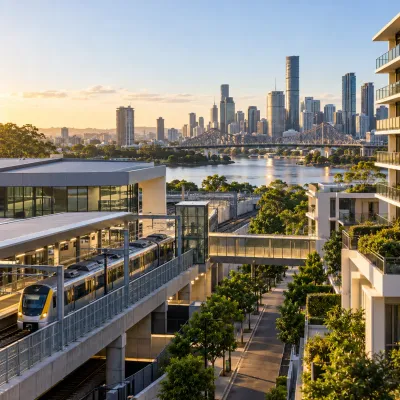
The project delivers four new underground stations at Boggo Road, Woolloongabba, Albert Street, and Roma Street, along with a new station at Exhibition and major upgrades to stations along the southern corridor.
Full details are published by the Cross River Rail Delivery Authority. By removing a longstanding bottleneck in the network, it allows more trains to run more often across the whole system, which is why its benefits reach far beyond the immediate station precincts.
To understand why the impact is so broad, it helps to know the problem it solves. For decades, Brisbane’s rail network funnelled through a single river crossing and a constrained inner-city core, which capped how many trains could run in peak hour no matter how many new lines were added elsewhere. Cross River Rail creates a second river crossing and a new spine through the city, lifting that ceiling.
The practical result is more frequent, more reliable services not just on the new line, but potentially across the Gold Coast and Sunshine Coast lines and the wider network that feeds into the city. For buyers, that means the connectivity story is not limited to a handful of new stations; it quietly improves the appeal of many suburbs whose existing services become more frequent and dependable.
When Does Cross River Rail Open?
Cross River Rail is in its opening phase, with passenger services on the new network commencing as the project reaches completion. Because major infrastructure timelines can shift, the most reliable source for the current status is always the official project.
Rather than relying on any single reported date, check the latest timeline directly with the Cross River Rail Delivery Authority and service information through Translink, which manages the network.
For property buyers, the exact opening month matters less than the long-term reality: the new stations and added capacity are permanent, city-shaping infrastructure, and their influence on the surrounding suburbs plays out over years, not weeks.
How Does Cross River Rail Affect Property Prices?
Major transport infrastructure can lift property demand by improving access, but the effect is often partly priced in well before the line opens. This is the single most important thing for buyers to understand.
Improved connectivity genuinely makes a location more desirable, supporting both owner-occupier and rental demand over time, a pattern reflected in the performance of well-connected suburbs in CoreLogic home value data.
However, the market anticipates infrastructure, so much of the expected uplift can already be built into prices by the time a project nears completion. Our analysis of Brisbane growth suburbs shows that connectivity is one driver among several, not a guarantee of outperformance. The buyers who benefit most are usually those who bought early on fundamentals, not those chasing the headline once everyone knows the story.
New Station Precincts Set to Benefit
The clearest beneficiaries are the suburbs around the four new underground stations, where a station is being built where none existed before. These precincts see the biggest step-change in access.
Woolloongabba gains an underground station alongside its role in the 2032 Olympics and major precinct renewal, making it one of the most watched suburbs in Brisbane. Boggo Road and neighbouring Dutton Park benefit from a new station serving the PA Hospital, the ecosciences precinct, and nearby university campuses.
The Albert Street station brings a new access point to the southern CBD, while the Exhibition station and the Bowen Hills area gain from renewal and event connectivity. The Brisbane City Council is coordinating significant planning around these precincts, and their appeal to renters makes them relevant to investors weighing the high rental yields Brisbane can offer in well-located, high-demand pockets.
What makes these precincts different from a simple station upgrade is the scale of surrounding change. Each is the subject of coordinated urban renewal, with new apartments, commercial space, and public realm being planned or built alongside the stations themselves.
That can be a genuine positive, creating vibrant, walkable, well-serviced neighbourhoods, but it also means significant new apartment supply in some pockets, which can temper short-term price growth even as long-term appeal rises. Woolloongabba in particular sits at the intersection of the new station, the Gabba’s Olympic role, and large-scale development, so it carries both the most upside and the most uncertainty.
Buyers in these precincts need to look closely at what is being built nearby, because tomorrow’s supply is as important to value as today’s connectivity.
Upgraded Southern Corridor Suburbs
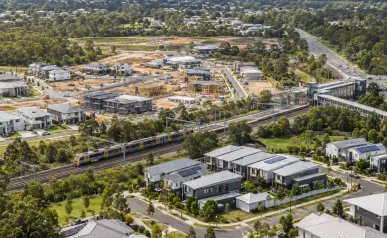
The southern rail corridor between Dutton Park and Salisbury benefits from station upgrades and improved services, lifting the appeal of a string of middle-ring suburbs. These are often more affordable entry points than the inner-city precincts.
Suburbs including Fairfield, Yeronga, Yeerongpilly, Moorooka, Rocklea, and Salisbury gain from rebuilt, more accessible stations and better connectivity to the city. Several of these are gentrifying, offering relative value with improving amenity.
However, and this is critical, several of these suburbs, particularly Rocklea, Fairfield, and parts of Yeronga, carry significant flood exposure and were affected in past flood events.
Any purchase here must be checked against the official FloodCheck Queensland mapping and a full due diligence checklist, because a better train station does nothing to change a property’s flood risk.
Which Suburbs Offer the Best Value?
The best value is usually found not in the most hyped precinct, but in well-located suburbs where the connectivity benefit is real and not yet fully priced in. Value and hype rarely sit in the same place.
The inner precincts like Woolloongabba carry a premium and a lot of attention, so genuine bargains are scarce, whereas some middle-ring corridor suburbs may offer better long-term value for buyers willing to do careful due diligence, especially on flood.
The right answer depends entirely on your budget, goals, and risk tolerance, which is where matching a suburb to your needs matters, as our guide to finding your ideal Brisbane home explains, and where our buyer services add the most value. The smartest buyers look past the marketing to the underlying fundamentals of each specific property.
The Risks: Buying on Infrastructure Hype
The biggest risk with an infrastructure story is overpaying for expectation, buying a property priced for a future that is already assumed. A healthy dose of scepticism protects your money.
Infrastructure timelines can slip, the uplift is frequently priced in early, and a station nearby does not offset fundamental problems like flood risk, a busy road, or a poor-quality building. Some buyers pay a premium for proximity to a station they will rarely use, while ignoring the things that actually drive long-term value, a trap the broader Queensland property market has seen many times.
Median data from the Real Estate Institute of Queensland helps benchmark whether a price genuinely reflects value or simply reflects the hype. Buy the property on its own merits, and treat the infrastructure as a bonus rather than the whole thesis.
There is also a difference between living near a station and living too close to one. A short, pleasant walk to a station adds real value, but a property directly beside a rail line or a busy new interchange can suffer from noise and reduced privacy that offset the convenience.
The same applies to apartments in heavily developed precincts, where an outlook over a construction site today may become an outlook onto a neighbouring tower tomorrow. These are exactly the nuances that a headline about a new station never captures, and they are where careful, on-the-ground assessment earns its keep. The goal is to capture the connectivity benefit without inheriting the downsides that can quietly undermine both liveability and resale.
How a Buyers Agent Helps You Buy Near Cross River Rail
A buyers agent helps you separate genuine, lasting value from infrastructure speculation, so you buy on fundamentals rather than headlines. In a market full of Cross River Rail marketing, that objectivity is worth a great deal.
A specialist assesses whether the connectivity benefit is real and already priced in, verifies flood and building risk in the corridor suburbs, benchmarks value against comparable sales, and negotiates without the emotion that infrastructure hype tends to create.
You can see the outcomes we have delivered in our client results, and the best starting point is a focused strategy consultation that maps your budget and goals to the right suburb, near the new network or otherwise.
Frequently Asked Questions
Which suburbs benefit most from Cross River Rail?
The clearest beneficiaries are the new-station precincts: Woolloongabba, Boggo Road and Dutton Park, the Albert Street area of the CBD, and the Exhibition and Bowen Hills area. The upgraded southern corridor, including Fairfield, Yeronga, Moorooka, and Salisbury, also benefits, though several of these carry flood risk that must be checked before buying.
Will Cross River Rail increase property prices?
It can support demand by improving connectivity, but much of the expected uplift is often priced in before a project opens. Infrastructure is one driver among many, not a guarantee of price growth. Buyers who benefit most usually buy early on strong fundamentals rather than chasing the headline once the story is widely known.
When does Cross River Rail open?
Cross River Rail is in its opening phase, with services on the new network commencing as the project reaches completion. Because major infrastructure timelines can change, always check the current status directly with the Cross River Rail Delivery Authority and Translink rather than relying on older reported dates.
Is it worth buying property near a new train station?
It can be, if the property has strong fundamentals in its own right and the connectivity benefit is not already fully reflected in the price. A station nearby does not offset flood risk, a poor building, or an inflated price, so the property should stack up on its own merits, with the infrastructure treated as a bonus.
Do Cross River Rail corridor suburbs flood?
Some do. Several southern corridor suburbs, particularly Rocklea, Fairfield, and parts of Yeronga, carry significant flood exposure and were affected in past flood events. A better train station does not change flood risk, so always verify the specific address against the official FloodCheck Queensland mapping before buying.
Should I use a buyers agent to buy near Cross River Rail?
For most buyers, yes. A local buyers agent helps you tell genuine value from infrastructure hype, verifies flood and building risk in the corridor suburbs, and benchmarks price against comparable sales. This objectivity is especially valuable in a market where Cross River Rail is heavily marketed and expectation can inflate prices.
Buying Smart Around Cross River Rail
Cross River Rail is genuine, city-shaping infrastructure, and the suburbs around its new stations and upgraded corridor are worth serious attention. But the smartest buyers treat the new line as one factor among many, buying on fundamentals, checking flood risk carefully, and refusing to overpay for a future that is already assumed in the price.
If you want help separating real value from hype around the new network, the team at Amassed can assess the fundamentals, verify the risks, and negotiate well on your behalf. Get in touch through our contact page to start the conversation.
Resources
- Cross River Rail Delivery Authority: official project details, stations, routes, and timeline.
- Translink: network and service information for Cross River Rail and South East Queensland.
- Brisbane City Council: planning and precinct information around the new stations.
- CoreLogic Australia: home value data to benchmark suburb performance.
- FloodCheck Queensland: official flood mapping to assess risk by address.
- Real Estate Institute of Queensland: median price and market data across Brisbane suburbs.

Elijah Turkovic is the founder of Amassed, a licensed buyer’s agent in Queensland (licence QPBL 4617660) and a member of the REIQ. He has spent more than 10 years in property, development and real estate, and lives in Broadbeach Waters on the Gold Coast.
He leads the team’s searches, due diligence and negotiations on home and investment purchases across Brisbane, the Gold Coast and the Sunshine Coast. Amassed acts only for buyers and takes no commissions, referral fees or kickbacks from sellers, agents or the inspectors it recommends.