
Key Takeaways
A complete guide to property negotiation and how a buyer’s agent secures a better price, covering seller psychology, pricing tactics, auctions and proven strategies.
- The selling agent is legally bound to the vendor, so without representation you are negotiating against a professional with no one in your corner.
- Winning starts with data, because comparable sales, not the asking price, tell you what a property is truly worth.
- Reading a seller’s real motivation often matters more than the offer itself, since terms can beat a higher price.
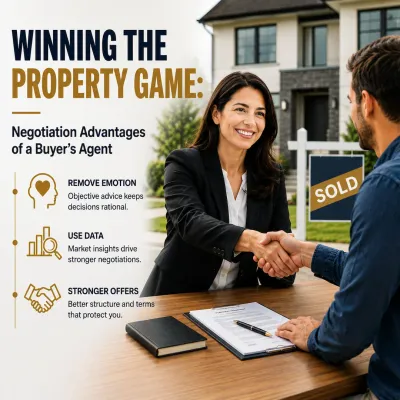
- Emotion is the enemy of a good deal, and a buyer’s agent provides the objectivity that protects your budget.
- The method of sale, auction or private treaty, changes your risk and your strategy entirely.
Buying property is likely the most significant financial transaction you will ever make, yet many buyers walk into it without professional representation, facing off against selling agents who negotiate for a living. The selling agent has one clear legal duty, to get the highest possible price for the vendor, so the obvious question is: who is fighting for you? This is where negotiation becomes your most powerful tool, and where a buyer’s agent changes the dynamic entirely.
It is not simply haggling over price; it is understanding value, leverage and the psychology of the seller. The Amassed buyer’s agents turn a stressful guessing game into a calculated decision, and disciplined expert negotiation is the heart of it. This guide walks through exactly how professional negotiation works, and how to apply it whether you engage help or go it alone.
What Does a Buyer’s Agent Do in a Negotiation?
A buyer’s agent acts exclusively for the purchaser, which is the single most important distinction in the entire transaction. While a selling agent is paid by the vendor to maximise the sale price, a buyer’s agency is paid by you to secure the right property at the right price. That difference is not a detail; it is the whole game, and our comparison of a buyer versus selling agent explains why it matters so much.
Their role runs far beyond opening doors. They are your strategist, researcher and real estate negotiator, filtering out poor assets, identifying value, and handling every conversation so your emotions never dictate the price. Crucially, they act as a buffer between you and the selling agent. When a buyer falls in love with a home and lets it show, they hand the seller leverage. A professional keeps your cards close, controls the flow of information, and negotiates from evidence rather than feeling.
There is a quieter advantage too. For most people, searching for property is a second job they never asked for, spent inspecting homes that look good online but disappoint in person. A buyer’s agent absorbs that legwork, shortlisting only properties that genuinely fit your brief, and often surfacing off-market and pre-market homes that never reach the public portals. That access changes the negotiation before it even starts, because a home with little or no competing interest is one you can secure closer to fair value rather than in a bidding frenzy.
Why Does Preparation Win Negotiations?
Because you cannot negotiate what you cannot measure. Effective negotiation begins long before the first offer, with a comprehensive understanding of the local market. The asking price is a marketing figure, not a statement of value, and treating it as fact is the most common and expensive mistake buyers make.
Comparable sales, not asking prices
To negotiate with confidence, compare the property against homes that have actually sold, not those merely listed. Look for comparable sales, similar in land size, bedrooms and condition, settled within the last three to six months and close by, using CoreLogic property data or your agent’s subscription tools. Layer in days on market, auction clearance rates and vendor discounting for the specific suburb, and factor in the details that move price most, such as school catchments and transport. If a selling agent quotes a high figure but the evidence shows comparable homes selling for less, you hold the leverage. Our guide to choosing a property expert covers how professionals build this evidence base.
Gather the full picture
Price is only part of your research. Investigate how long the property has been listed, whether the price has been reduced, and why the vendor is selling. That context tells you how much competition to expect and how aggressive your offer should be, turning guesswork into strategy.
How Do You Read a Seller’s Motivation?
By treating the person, not just the property, as the thing you are negotiating with. Every vendor has a reason for selling, and uncovering it is your biggest source of leverage. Time pressure is the most powerful and common motivator: a vacant home often signals two mortgages or lost rent, and a vendor who has already bought elsewhere faces settlement deadlines, bridging finance and double stamp duty. When the clock is ticking, a fast, certain sale can be worth more than a record price. Financial stress and a simple desire to feel they “won” the deal are two other motivations that shape what a vendor will accept. In markets like the Brisbane property market, where sentiment shifts suburb by suburb, reading these signals well is often the difference between winning and overpaying.
The four types of sellers
Most vendors fall into one of four types, and each responds to a different approach.
| Seller type | What they want | How to win them |
|---|---|---|
| Ego-driven | Recognition that their home is the best | Praise the property, then discuss price on the facts |
| Ethics-driven | To do the right thing | Present honest inspection findings; they often adjust |
| Relationship-driven | The right buyer, not just the highest | Share your story and build genuine rapport |
| Convenience-driven | A simple, certain exit | Offer clean terms and a straightforward settlement |
Cognitive biases that inflate prices
Vendors are human, and human brains take shortcuts. Anchoring bias ties their expectations to the highest appraisal they ever received or a stellar neighbour’s sale. Overconfidence convinces them their home is immune to a downturn, and the endowment effect makes them value their own property well above an identical one next door, simply because it is theirs. You do not argue with these biases; you present objective evidence and let recent sales do the persuading.
Broader forces shape seller motivation too. The daily news cycle emboldens vendors when headlines boast of booming prices and quietly deflates them when the narrative turns to uncertainty. When the REIQ clearance data shows high auction results, vendors feel powerful, and when listings sit for months, that confidence fades and a solid, certain offer carries real weight. Reading where a vendor sits on this spectrum is often worth more than any single dollar figure in your offer.
What Is the Psychology Behind Property Pricing?
Selling agents price properties to trigger a response, not just to state a value. First impressions form astonishingly fast: research from Princeton University found people judge a face in about a tenth of a second, and the same snap judgement applies the moment a buyer sees a listing or pulls up to the kerb. A tidy facade creates a “halo effect” that colours the entire inspection, which is why styling and presentation lift offers. Emotion then does the heavy lifting: Commonwealth Bank research has warned that emotional attachment leads many buyers to pay more than they planned.
Pricing itself is a lever. Round, prestige numbers like $1,200,000 signal quality, while precise figures such as $712,000 signal calculation, and research into thousands of sales suggests precise prices attract offers closer to the mark because buyers assume the seller has done their homework. Charm pricing that ends in nine works in retail but backfires in real estate, because a home listed at $499,999 vanishes from a buyer’s “$500,000 and above” search filter.
The fear of missing out
FOMO is the most powerful tool in the selling agent’s kit. Short auction campaigns compress your research window, and crowded open homes show you exactly how much competition you face, which pushes buyers to stretch beyond their budget. Recognising manufactured urgency for what it is, and holding your pre-set limit, is how you keep logic in charge of the decision.
Auctions or Private Treaty: Which Favours the Buyer?
They demand completely different strategies, and the seller usually chooses the method. An auction is a public sale to the highest bidder above the reserve, typically after a four-week campaign, and the sale is generally unconditional with no cooling-off period, so your finance and building and pest checks must be done beforehand, as the Queensland Government sets out. A private treaty sale lists an asking price and invites offers, allowing negotiation and, crucially, conditions such as “subject to finance” or “subject to building and pest”. Our due diligence checklist is essential reading before either.
| Factor | Auction | Private treaty |
|---|---|---|
| Price | Set on the day by competition | Clearer starting point from the asking price |
| Conditions | Unconditional, no cooling-off | Can include finance and inspection clauses |
| Transparency | You see who you bid against | Offers happen behind closed doors |
| Pressure | High, split-second decisions | Time to consider and seek advice |
In a hot market, sellers favour auctions to drive competition, so cash-ready buyers with unconditional finance hold an edge. In quieter conditions, private treaty gives cautious buyers the safety of conditions and time. Match the method to your finances and risk tolerance rather than fearing either. It is also why engaging a buyers agent for auctions is so common, because a professional bidder knows exactly how a buyers agent helps at auctions: reading the tempo, bidding to a firm ceiling and keeping raw emotion out of the room.
What Are the Proven Negotiation Strategies?
Successful real estate negotiation is preparation and psychology, rarely aggression. The goal is a win-win outcome where the seller feels comfortable selling to you, but on terms that favour your position. External conditions set the backdrop: when the Reserve Bank of Australia lifts rates, borrowing capacity shrinks and motivated vendors value certainty more highly, which strengthens a clean offer. Access matters too, because many of the best homes sell quietly, and our guide to off-market property shows how representation opens those doors before the crowd arrives.
Structure the offer, not just the price
Price wins headlines, but terms win deals. If a vendor needs a quick settlement, a rent-back period or a shorter finance clause, structuring your offer to solve their specific problem often beats simply bidding higher. Being organised and finance-ready presents you as a low-risk buyer, and a considered use of scarcity, such as a fair time limit on your offer, encourages a decision without hostility. Precise, non-round offer figures signal that your number is calculated, not plucked from the air.
Professional negotiators also lean on structure rather than instinct. A staged offer-and-counter model plans each increment in advance, moving the price toward your target in calculated steps rather than reactive jumps. In competitive campaigns, an escalation clause can automatically better rival offers by a set amount up to a firm ceiling, showing you are serious without paying your maximum unless you must. And the simple discipline of the three Ps, knowing when to push with information, when to pull back to create urgency, and when to persist with steady follow-up, keeps you in control of the tempo instead of the selling agent.
Managing the paperwork and process
Negotiation does not end when the price is agreed. The administrative side of a purchase is substantial, spanning contracts, building and pest inspections, strata or body-corporate records and firm unconditional dates, and a single missed deadline or overlooked clause can carry serious legal and financial consequences. A buyer’s agent coordinates with your solicitor and mortgage broker so every document is accurate and lodged on time, reviews the contract terms for nasty surprises, and keeps the transaction moving to settlement. That meticulous back-office work is where a strong price is protected, because a great deal on paper can still unravel if the process is mishandled.
Common mistakes to avoid
The costliest errors are emotional. Falling in love with a home leads buyers to stretch budgets and overlook faults in the building report, so treat every purchase as a business decision first. Reflexively “meeting in the middle” is another trap, because it leaves money on the table; make smaller, calculated increments instead and let the other side work for every dollar. And never negotiate without preparation, because knowing the comparable sales and the seller’s motivation is the foundation everything else stands on.
How Much Can a Buyer’s Agent Save You?
Often more than the fee. It seems counterintuitive that paying a professional saves money, but the cost of a mistake dwarfs the cost of advice. By negotiating a lower price, spotting a “lemon” with hidden structural issues, and knowing the gap between asking price and true value, a good agent can secure you fair market value or better, meaning you enter with instant equity rather than negative equity. Add the tens of thousands a single due-diligence miss can cost, from flood risk to structural defects, and the maths usually favours representation. Our breakdown of buyers agent costs puts the fee in perspective.
Proven outcomes in practice
The value shows up at settlement. Consider a couple relocating from Sydney to the Sunshine Coast with a precise brief: a single-level home with a pool, garage and a dog-friendly garden. After identifying the right property, the real skill was in the terms, negotiating a favourable price while aligning settlement perfectly with the sale of their Sydney home, removing the need for bridging finance or temporary accommodation. That is negotiation doing more than saving dollars; it is removing risk and stress. A disciplined portfolio management approach applies the same thinking across every purchase, and you can see the results on our client results page.
Frequently Asked Questions
Can a buyer’s agent help with auctions?
Yes. Auctions are intimidating and emotional, and it is easy to bid past your limit in the heat of the moment. A buyer’s agent bids on your behalf to a pre-agreed strategy and ceiling, reads the room, and manages the tempo, which removes the emotion and stops you overpaying while still giving you the best chance of securing the property.
How do you find out why a vendor is selling?
The simplest way is to ask the selling agent directly with open questions, such as the vendor’s ideal settlement timeline or whether they have already bought elsewhere. Clues also help: a vacant home, deferred maintenance or an urgent campaign can signal time pressure or financial stress, which tells you whether certainty and terms may matter more than price.
Can a low offer offend a seller?
Yes, especially an ego-driven or emotionally invested vendor, and an offended seller may refuse to deal with you at all. Always attach a logical reason to a lower offer, basing it on recent comparable sales or the cost of necessary repairs. Framing your price as calculated rather than opportunistic keeps the negotiation collaborative rather than combative.
What is the key to successful property negotiation?
Preparation, market knowledge and emotional discipline. You must know exactly what a property is worth from comparable sales data, understand the seller’s motivation, and be genuinely willing to walk away if the numbers do not stack up. That willingness to walk is your single strongest source of leverage in any negotiation.
Does a buyer’s agent check the contract?
A buyer’s agent is not a solicitor, but they coordinate the due diligence process end to end. They arrange contract reviews with your legal team, organise building and pest inspections, and flag risks such as easements, flood overlays or unfavourable clauses, so you understand exactly what you are buying before you commit.
Can a buyer’s agent really save me money?
Yes, in two ways. They negotiate a lower purchase price using data and seller insight, and they prevent expensive mistakes such as buying an overpriced or structurally compromised property. For busy buyers, they also save significant time, which carries real monetary value. In most cases the savings comfortably exceed the fee.
Negotiate Your Next Purchase with Confidence
The property market is complex, but your journey through it does not have to be. Negotiation and advocacy are not buzzwords; they are the tools that separate an average purchase from an exceptional one. By understanding the market, reading the seller, and holding your discipline when emotion and urgency build, you shift the balance of power in your favour.
Whether you negotiate yourself or bring in a professional, the principles are the same: prepare thoroughly, stay objective, and structure the deal around what the seller truly needs. When you would like a professional property negotiation service in your corner, a no-obligation strategy consultation is the simplest place to start, or you can get in touch with a team that represents only you.
Resources
- CoreLogic: Australian property data and comparable sales
- Real Estate Institute of Queensland: market and auction data
- Princeton University: research on rapid first impressions
- Commonwealth Bank: research on emotion in home buying
- Queensland Government: buying a home, auctions and cooling-off
- Reserve Bank of Australia: cash rate and borrowing conditions
- Investopedia: fair market value explained

Elijah Turkovic is the founder of Amassed, a licensed buyer’s agent in Queensland (licence QPBL 4617660) and a member of the REIQ. He has spent more than 10 years in property, development and real estate, and lives in Broadbeach Waters on the Gold Coast.
He leads the team’s searches, due diligence and negotiations on home and investment purchases across Brisbane, the Gold Coast and the Sunshine Coast. Amassed acts only for buyers and takes no commissions, referral fees or kickbacks from sellers, agents or the inspectors it recommends.