
Key Takeaways
- A selling agent works for the vendor and earns a commission of roughly 2% to 3.5% of the sale price, with a built-in incentive to push the price up.
- A buyers agent works only for you and charges either a fixed fee of about $8,000 to $33,000 or a percentage of 1.5% to 3% of the purchase price.
- Buyers agent fees vary by state, with Queensland among the most competitive and Sydney among the most expensive.
- Beyond the agent fee, budget for stamp duty, building and pest inspections, conveyancing, lenders mortgage insurance, and ongoing council rates.
- A buyers agent who negotiates a discount larger than their fee effectively pays for themselves, which is common in a well-run purchase.
Buying a house or investment property is one of the biggest financial commitments you will ever make. It makes sense to understand exactly who you are paying and what value they bring before you sign anything. Many purchasers confuse the roles of different real estate professionals. They assume the friendly agent at the open inspection is there to help them secure a great deal. That can be a costly mistake.
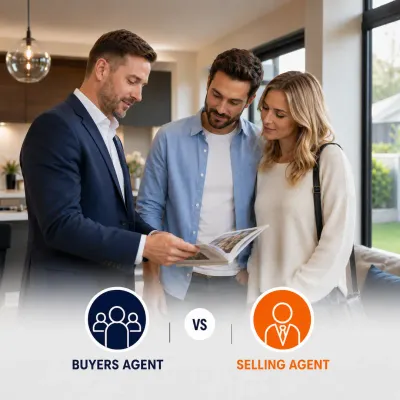
The fundamental difference between a buyers agent and a selling agent comes down to who they represent during the transaction. The selling agent works exclusively for the vendor, and their goal is to extract the maximum amount of money from you. A buyers agent works exclusively for you, and their job is to secure the right property at the lowest possible price on the most favourable terms. Engaging a dedicated advocacy service means you have an expert protecting your financial interests at every step. Understanding how both sides are paid will help you make smarter decisions and keep more of your money.
How much does a selling agent cost?
When you walk into a property inspection, the person greeting you at the door is the selling agent. They are hired by the current owner to market the property, manage enquiries, and negotiate the final sale. A property selling agent is a highly trained professional who knows how to highlight a home’s best features while quietly downplaying its flaws. They are skilled at reading buyers, asking strategic questions to uncover your maximum budget, and creating a sense of urgency around the deal.
Their ultimate responsibility is to the vendor. They have a legal and ethical obligation to achieve the highest possible sale price, which is the opposite of what you want. The vendor pays the selling agent, usually through a commission calculated as a percentage of the final sale price. Across Australia, real estate commission rates for selling agents generally range from 2% to 3.5%, and these selling agent fees are always paid by the vendor.
If a property sells for $1,000,000, the selling agent might earn between $20,000 and $35,000. Because their income is tied directly to the sale price, the selling agent has a strong financial incentive to drive the price up. They do not work for you, and they will not help you get a bargain. This is exactly why understanding how a buyers agent differs from a real estate agent matters so much before you make an offer.
What is a buyers agent and how are they different?
A buyers agent, also known as a buyers advocate, sits on the opposite side of the negotiation table. They are licensed professionals who represent the purchaser and no one else. Instead of trying to sell you a specific house, a buyers agent searches the entire market to find a property that matches your brief. They handle the heavy lifting, including researching suburbs, inspecting homes, organising rigorous due diligence, and managing complex negotiations.
Their priority is protecting you. A good buyers agent uses local market data and recent sales evidence to determine the true value of a property. They remove the emotion from the purchase and apply calculated negotiation strategies to secure the home for the lowest price possible. In effect, they level a playing field that is otherwise tilted entirely in the vendor’s favour.
How much does a buyers agent cost in Australia?
Because buyers agents work for you, you are responsible for paying their fees. The cost of hiring a buyers agent depends on the level of service you require and the state in which you are purchasing. A common question is how much do buyers agents charge, and the honest answer is that most agencies use one of three main pricing structures. Knowing how each works helps you compare quotes fairly.
Fixed-fee models
Many modern buyers agencies prefer a fixed fee structure. You agree on a set price before the property search begins, which gives you complete certainty. The fee does not change whether you buy a property for $800,000 or $950,000. Fixed buyers agent fees generally range from $8,000 to $33,000 depending on the complexity of the search and the target location. This model suits buyers who want a predictable buyers advocate cost, with buyers advocate fees agreed in writing and no surprises at settlement.
Percentage-based commissions
Some buyers agents charge a percentage of the final purchase price, typically between 1.5% and 3%. For a property bought at $800,000, a 2% fee would equal $16,000. Critics of this model suggest it creates a conflict of interest, because the agent earns more if you pay a higher price. In practice, reputable agents rely on word of mouth and repeat business, so their focus stays firmly on getting you a strong result rather than inflating their own commission.
Auction bidding services
If you have already found your ideal property but feel anxious about bidding, you can hire a buyers agent just for auction day. They will attend and bid strategically on your behalf, keeping a clear head when emotion runs high in the crowd. This service typically involves an upfront attendance fee of around $500 to $600, plus a success fee of $1,000 to $2,000 if they win the property for you.
State-by-state fee variations
Property prices and market dynamics vary significantly across Australia, and this shapes what you can expect to pay for full-service representation. In New South Wales, Sydney holds some of the most expensive real estate in the country, so buyers agent fees range from 1.5% to 3%, or a fixed fee between $10,000 and $21,000. Victoria is similar, where buyers advocate Melbourne cost sits between 1.5% and 3%, or fixed buyers agent fees Melbourne buyers pay of roughly $8,000 to $18,000.
In Queensland, fees are among the most competitive in the country. A typical buyers agent cost Brisbane buyers face runs from 1% to 2.7%, with fixed options between $6,000 and $18,000, and buyers agent fees Brisbane and buyers agent fees Gold Coast quotes tend to sit in a similar band. If you are buying along the coast, our Brisbane property market team can explain local pricing in detail.
In Western Australia, Perth buyers can expect 1.8% to 2.5%, or fixed fees of around $10,000 to $12,000. South Australia offers highly competitive rates, with Adelaide percentages around 1.5% to 2.4% and fixed fees of $8,000 to $10,000. Hobart agents in Tasmania typically charge 1.5% to 2.5%, or a fixed rate between $13,000 and $20,000. In the Australian Capital Territory, Canberra fees range from 1.8% to 2.8%, while in the Northern Territory, Darwin buyers might pay 1.8% to 2.5%, or a fixed fee of $9,000 to $12,000.
What other costs come with buying a property?
The agent fee is only part of the picture. Hidden expenses are the costs of purchasing and owning a property that are not included in the sale price, and failing to account for them can leave you thousands of dollars out of pocket at the worst possible moment. When you understand where every dollar is going, you regain control of the buying process. It helps to break these into upfront, loan, ongoing, and potential costs.
Upfront fees
Before you even sign a contract, several upfront costs apply. A combined building and pest inspection is a non-negotiable step in your due diligence, revealing structural damage, termite activity, or moisture issues that are invisible to the untrained eye. This might cost between $400 and $600, yet it can save you tens of thousands in future repair bills.
Conveyancing or legal fees cover the contract review, title searches, and settlement, protecting you from nasty surprises such as unpaid rates or illegal building works. If you are buying a townhouse, apartment, or unit, a strata report is essential, because it reveals the financial health of the body corporate and any looming special levies. Knowing how much deposit you need first helps you slot these upfront fees into a realistic budget.
The largest upfront cost outside the deposit is usually stamp duty, a state government tax based on the purchase price. The amount varies depending on whether you are buying a home to live in or an investment, and concessions are often available for first-home buyers. In Queensland, an eligible first-home buyer purchasing an established home valued at $500,000 as their principal place of residence generally pays no transfer duty at all, which is a major saving.
Loan and lender fees
Securing finance carries its own administrative costs. Some lenders charge a one-off application fee, typically between $150 and $600, to process your loan and value the property. Mortgage registration is a government fee that formally records your lender’s interest against the title. If your deposit is less than 20% of the purchase price, your lender will usually require lenders mortgage insurance. This premium protects the lender, not you, if you default and the property sells for less than the outstanding debt. Lenders mortgage insurance can help you enter the market sooner with a smaller deposit, but it can add thousands to your loan balance, so it deserves careful feasibility analysis before you commit.
Ongoing costs
Once settlement is complete, the expenses shift from acquisition to ownership. Council rates cover community services like waste collection and road maintenance, and are usually billed quarterly, with a reimbursement to the seller for any rates paid in advance. Building insurance becomes your responsibility from the moment the contract goes unconditional, and you will also want contents insurance for your belongings. For unit and townhouse owners, strata fees, or body corporate levies, are mandatory and cover common-area maintenance, building insurance, and administration. These can vary widely depending on amenities such as pools or lifts.
Potential costs
Finally, savvy buyers prepare for costs that might happen. Renovations almost always cost more than expected, so budgeting a contingency for immediate repairs or cosmetic updates in the first six months is wise. Interest rates also fluctuate. If you are on a variable rate, stress-testing your budget by calculating repayments at a rate 2% to 3% higher than your current offer ensures you can comfortably hold the property even when the market shifts.
What does buying property alone really cost?
Many buyers hesitate to hire an advocate because they want to avoid the upfront fee, so they decide to navigate the market alone. Unfortunately, this often leads to hidden costs that far exceed the price of professional representation. The highest hidden cost is emotional bias. When you fall in love with a home, logic often goes out the window, and selling agents spot that attachment immediately and use it to push you past your budget.
Another major cost is a lack of negotiation skill. Real estate agents negotiate property deals every single day, while the average person might buy two or three properties in an entire lifetime. Going head to head with a professional negotiator usually ends with the buyer paying more than the property is worth. There is also the cost of poor property selection. Buying a home with hidden structural defects, poor drainage, or a low strata sinking fund can cost tens of thousands in unexpected repairs that only surface after you own the asset.
What value does a buyers agent add beyond price?
The true value of a buyers agent extends well beyond simple price negotiation, and it shows up as real leverage in a competitive market. One major advantage is off-market access. Many premium properties never reach public portals like realestate.com.au or Domain, because some vendors prefer quiet, private sales without the hassle of open inspections.
Buyers agents hold deep networks and strong relationships with local selling agents, so they can get you through the door before the general public even knows a property exists.
Property vetting is another critical benefit. An experienced advocate conducts thorough due diligence on every shortlisted property, checking zoning, reviewing strata reports, analysing historical growth data, and coordinating independent building inspections. That level of scrutiny is exactly what protects you from buying a flawed asset, and it is reflected in our client results.
Finally, a buyers agent saves you hundreds of hours. Searching for property means sacrificing evenings and weekends scrolling through listings, driving between open homes, and chasing unreturned phone calls. Delegating that exhausting process to a professional gives you your time back.
Buyers agent vs selling agent: a direct cost comparison
To make an informed decision, it helps to look at the financial dynamics side by side. The selling agent is paid by the vendor, and their fee is a percentage of the final sale price. This means the vendor ultimately covers the cost, but the selling agent will still do everything in their power to make you pay a premium and maximise that commission.
The buyers agent is paid by you, and their fee is either a fixed amount or a percentage of the purchase price. While this requires an upfront commitment, their explicit goal is to reduce the final purchase price and secure favourable contract terms on your behalf.
When you factor in the negotiation savings, the avoidance of a bad investment, and the time saved, the cost of a buyers agent often pays for itself. If a buyers agent charges a $15,000 fee but negotiates a $40,000 discount on the asking price, you are immediately $25,000 better off, before you even count the value of avoiding an expensive mistake.
Do buyers agent fees pay for themselves?
Navigating the Australian property market takes a clear strategy and genuine local knowledge. While the vendor has a dedicated professional working hard to drive the price up, you deserve a seasoned expert working just as hard to bring that price down. The upfront cost of a buyers advocate might seem significant at first glance. Yet when you weigh that fee against the risk of overpaying, the stress of an endless search, and the danger of buying a compromised property, professional representation becomes an essential investment rather than an expense.
The right advocate levels the playing field and gives you total confidence in your property journey. If you are ready to stop guessing and start making strategic property decisions, you do not have to do it alone. You can contact our team about independent representation, or read our guide on how to choose the right expert before you commit to anyone.
Frequently Asked Questions
Are buyers agent fees tax-deductible?
This depends entirely on your purchasing intent. If you are buying an owner-occupier home to live in, the fee is a personal expense and is not tax-deductible. If you are purchasing an investment property, the Australian Taxation Office generally allows you to add the buyers agent fee to the property’s cost base, which can reduce your capital gains tax when you eventually sell. The rules around investment property tax changed for gains after 1 July 2027, so this is general information only, not personal advice. Always confirm your situation with a registered tax agent.
Do buyers agent fees include GST?
Yes, buyers agent fees in Australia are subject to the Goods and Services Tax. When reviewing a fee proposal or engagement document, always check whether the quoted figure is inclusive or exclusive of GST so there are no surprises at settlement.
How much does a buyers agent cost in Brisbane?
In Brisbane, buyers agents are among the most competitively priced in the country. Expect a percentage fee of roughly 1% to 2.7% of the purchase price, or a fixed fee between $6,000 and $18,000, depending on the search brief and property value. Many buyers ask how much does a buyers agent cost in Brisbane compared with Sydney, and the answer is usually noticeably less, because Queensland price points are lower.
What extra costs should I budget for beyond the agent fee?
Your buyers agent fee covers their professional time and expertise, but you will still need to budget for third-party costs. These include building and pest inspections, strata report fees, conveyancing or legal fees, lenders mortgage insurance if your deposit is under 20%, and government stamp duty, which is often the single largest upfront cost after your deposit.
Can a buyers agent help with off-market properties?
Yes. Buyers agents often access off-market properties through their extensive networks. These homes are not publicly advertised, which gives you exclusive opportunities and less competition than you would face bidding against a full field of buyers on a public listing.
What is the difference between a buyers agent and a selling agent?
A selling agent is hired by the vendor to achieve the highest possible sale price, so their loyalty sits with the seller. A buyers agent is engaged by you to secure the right property at the lowest possible price. One works to push the price up, and the other works to bring it down, which is the core reason the two roles should never be confused.
Resources
- Australian Taxation Office: rental property and capital gains guidance
- Queensland Revenue Office: transfer (stamp) duty
- Queensland Government: First Home Owner Grant
- ASIC Moneysmart: lenders mortgage insurance and buying costs
- Australian Bureau of Statistics: residential property prices
- Real Estate Institute of Queensland: buying and industry standards
- CoreLogic: Australian housing market data

Elijah Turkovic is the founder of Amassed, a licensed buyer’s agent in Queensland (licence QPBL 4617660) and a member of the REIQ. He has spent more than 10 years in property, development and real estate, and lives in Broadbeach Waters on the Gold Coast.
He leads the team’s searches, due diligence and negotiations on home and investment purchases across Brisbane, the Gold Coast and the Sunshine Coast. Amassed acts only for buyers and takes no commissions, referral fees or kickbacks from sellers, agents or the inspectors it recommends.